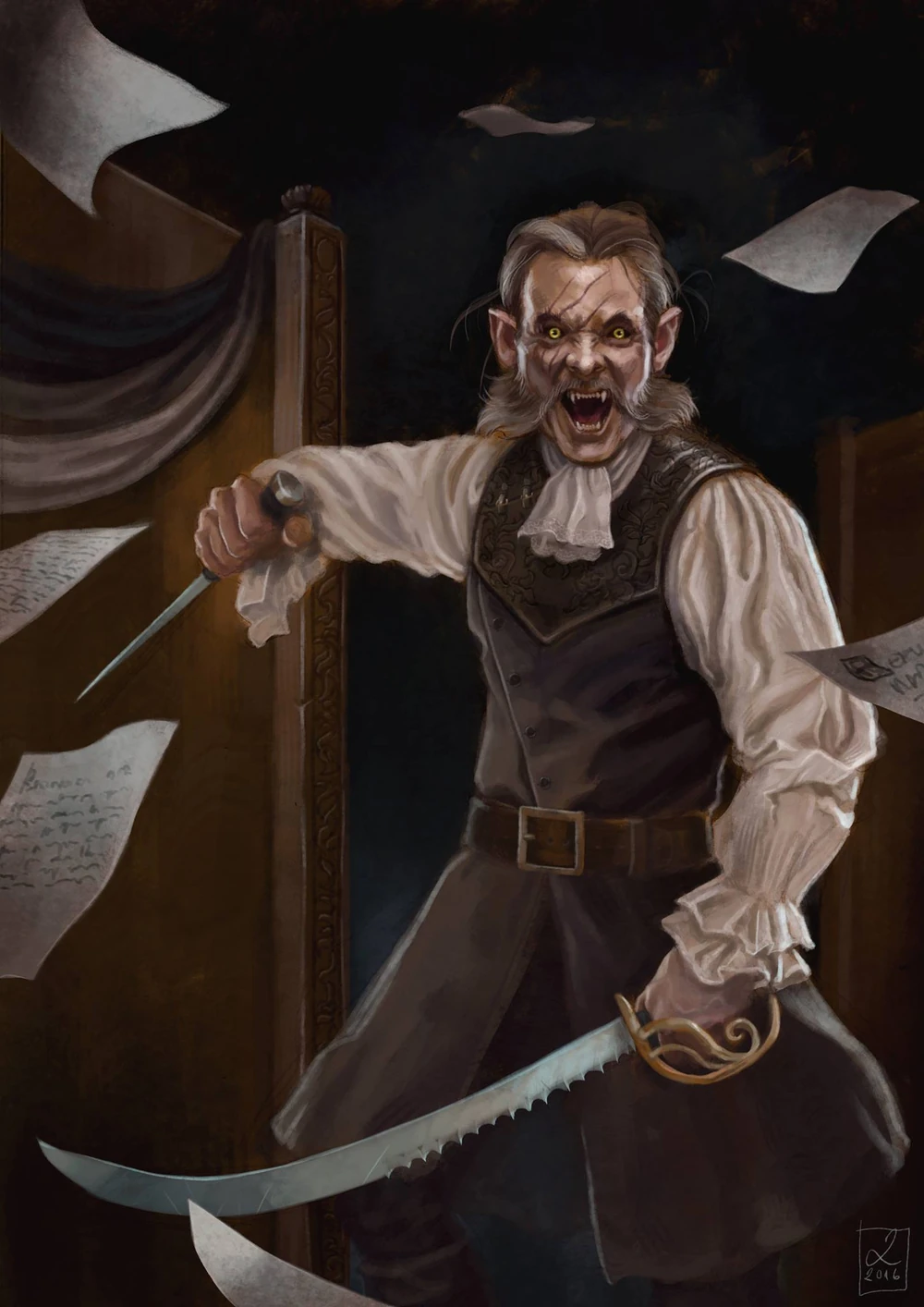

From the Records of Citizen Prefect Frenzl Havermans — 23rd of Cunical, Year Twenty
I fastened the Prefect’s badge, with its tricolour ribbons attached, to my uniform, and once more surveyed myself in the great mirror in the antechamber of the Commander’s Office. Its wooden frame was carved with the solemn sentences of the Preamble to the Constitution.
My curly fair hair; my grave, prefectural countenance; the black Prefect’s uniform, with its golden buttons and epaulettes; the tricolour pattern upon the ribbon encircling my hat, and upon the sash about my waist. Having assured myself that nothing was amiss in my attire, I drew forth my watch once more—a Republican watch, bearing the image of a cuckoo, the emblem of punctuality—and consulted the hour.
Twenty minutes past four.
This island of Alvald, whose liberation we celebrated with such rejoicing, might, upon a map, appear a most agreeable place in which to live. But one need not be a great geographer to know what climate awaits an island surrounded by ocean, and situated so far to the south: an ocean forever troubled by waves, a grey sky, wind, and cold.
During my perilous balloon passage from the mainland to this place, the wind and cold caused me greater discomfort than the mortal danger presented by enemy air patrols. My balloon descended upon the very square before the Regional Commander’s Headquarters in Alvaldstadt. Yet those few metres between the landing-place and the entrance to the building were enough to teach me that the cold upon Alvald’s soil was no less severe than that which reigned in the heavens above it.
Nevertheless, as a Republican, I must not complain of the territory entrusted to my duty. And my present duty was of the highest importance.
Once more I took from my pocket my official commission. It declared that the Committee of Public Command appointed Citizen Frenzl Havermans Special Prefect of the Island of Alvald, with extraordinary powers to investigate two unresolved murders of children from the Republican School, committed, respectively, by a Werewolf and a Vampire.
As Citizen Commander of the Department of Internal Affairs of the People had informed me, I had been chosen because my hitherto exceptional achievements in the discharge of Republican duties recommended me for a case of particular importance to the Republic.
I would add, although the Citizen Commander had said nothing to me on this subject, that another consideration may have influenced the choice of my person. In one of his speeches, Citizen Hrebs himself had recommended me as the finest Republican police officer for this task.
I had not joined his club, for I could not accept the doctrine of the abolition of property. Yet I continued to regard him as the most thoroughly revolutionary of men, and therefore as one of the most worthy of a revolutionary’s respect—a revolutionary, that is, such as I considered myself to be.
There was, moreover, reason to suppose that, by appointing me to this position, the Government wished to soothe the discontent of the Hrebsites with the Regional Command of Alvald. That body was headed by Reiner Kunze, a lawyer from Alvaldstadt, who, at the beginning of his tenure, had ordered the annihilation of several of their members for the burning of certain Alvald castles.
Since Urpen’s fiancée had been condemned to banishment for violating the Republican Code, and since Liberator, in its infatuation with its own private troubles, had written of little else without ceasing, the Rooster, the Beaver, and the Ermine had evidently become desirous of drawing the Opposition on the Left nearer to themselves.
It was Reiner Kunze himself, Regional Commander of Alvald, who now awaited me in his office at the Regional Command Headquarters.
The Commander’s Office reflected the revolutionary spirit of the Republic. Here, as upon the mainland, that spirit had gained complete dominion over the interior.
The walls, adorned with tricolour ribbons, bore a great number of framed decrees, laws, and declarations. There was also a Revolutionary Calendar, by now customary in the interiors of Republican homes and public institutions alike, both for practical and patriotic reasons. Its pages displayed allegorical fables and scenes from Republican history.
Almost the entire wall behind the Regional Commandant’s chair was covered by a reproduction, life-sized and faithful to the original, of Gaulus’s Emergence from the Secret into the Public Sphere.
It was a powerful scene. The faces of the People’s Representatives, assembled beneath the light of candles, seemed almost alive with excitement. At the centre, the Representative Hezels stood at the rostrum, one hand raised, reading aloud the proposed decree.
Even the chest in the corner of the office was painted with a motif which, if I observed it correctly, depicted a barricade upon which the tricolour banner had been planted.
Upon the wooden writing table before Citizen Regional Commander Kunze lay the Constitution and the Republican Code, a pile of papers, a quill and inkwell, several candlesticks, hourglasses of various sizes, a seal, and sundry other articles customary to a working desk.
The room was warmed by a fire burning in a white marble hearth adorned with gilded laurel wreaths. After the cold from which I had just emerged, this was a comfort that could scarcely go unnoticed.
“Citizen Reiner Kunze, Regional Commander, I greet you as a fellow Citizen! Citizen Prefect Frenzl Havermans, invested with extraordinary powers by the Committee of Public Command and exempt from the supervision of the Censor of Public Officials,” I announced, introducing myself.
“Honour the Constitution, Citizens!”
“Honour the Constitution, Citizens!” the Regional Commander replied, rising from his chair.
Citizen Regional Commander Kunze wore the tricolour sash, the emblem of his Republican office, across his frock coat. A tricolour scarf encircled his waist, and upon his head rested a top hat bearing a tricolour cockade and plume.
In his hand he held a cup of black Neulandic tea, a beverage rare upon the mainland, and one which bore witness to the island’s recent royalist rule.
He appeared exceedingly nervous and spoke with great rapidity.
“Citizen Prefect Frenzl Havermans, I greet you as a fellow Citizen! Immediately before your arrival, we received word of the third murder of underage Citizens at Atrolen. A minor Citizen has been found dead in a cellar where saltpetre was being extracted. The body was bitten, and entirely drained of blood.”
“Boo!” I cried at this news.
“Let the vigilance of those who execute Republican Law overcome the triumphant malice of crime,” said the Regional Commander. “I propose that we proceed to the scene without delay.”
He set his teacup upon the table. Painted upon it was a cat, accompanied by the word Incorruptibility. The tea within remained almost untouched.
“Duty first; enjoyment afterwards, and without a care!” he proclaimed, and made for the door.
A few minutes later, we were in a carriage bound for Atrolen. Another uniformed man had joined us, introducing himself as Citizen Leitmar, of the District Police Administration. He sat beside me, whilst Kunze sat opposite, having requested a seat facing the direction of travel, lest he otherwise suffer some indisposition.
Through the window we could behold the flat landscape of Alvald, adorned with windmills. Upon a few of them, great sails revolved mightily; but a far greater number had been damaged in the war, and either lacked sails altogether or bore the sorry remnants of them, dangling forlornly from their structures. This landscape was bounded only by the grey sky, the almost black sea in the distance, and, here and there, the forests that cut across it. Above it, on several occasions, I could clearly discern enemy balloons.
As we travelled, the two men related to me every particular of the first two murders: one, by all appearances, committed by a werewolf; the other, by a vampire. Almost all of this was already well known to me, for information concerning the cases had been arriving regularly at the Command of the Department of Internal Affairs of the People, and I had studied it in detail immediately before my departure.
The only novelties were the very latest particulars, which had not yet had time to be dispatched and reach the Continent before I set out. These consisted of interrogations of various werewolves and vampires residing in Atrolen and throughout the District of Central Alvald (some of whom passed through Atrolen more frequently, others less so—and a few, if their own words were to be believed, had never passed through it at all). The conclusion was invariably the same: either these persons could not possibly have committed the crime, on account of an exceptionally strong alibi—whether at the very moment of the crime, or because their presence elsewhere, given the distance from Atrolen, rendered their presence at the scene impossible at the time of its commission—or there existed no means whatsoever of connecting them with the deed, save by their race (and, in the case of werewolves, the colour of their fur), so as to distinguish them as more probable perpetrators than the dozens of other persons who likewise possessed no alibi but shared the very same characteristic in question. It would be neither morally Republican nor conducive to the Republic’s war effort to impose upon all such persons measures of precaution, such as imprisonment or uninterrupted physical surveillance. Not infrequently, both circumstances applied at once.
Within Atrolen itself, meanwhile, there resided no vampire on a permanent basis save for a little vampire girl who, at the time of the murder of the boy Frenzer by a vampire, had been lying in the school dormitory, surrounded by a number of other children. But Alvald is not so vast in extent that any of the seventy-two vampire citizens registered in Central Alvald could be omitted from consideration as a potential suspect in this abominable affair. In all probability, some vampires from either of the other two Alvald districts had to be seen as potential suspects as well.
“Citizens, I have been informed that peasants dug up the corpse of the boy previously slain by a vampire and pierced it with a hawthorn stake,” I asked, for it was of the utmost importance to understand the society in which we were to carry out our duties. “Does this mean that we may expect the highest degree of superstition here?”
“It is true,” Kunze confirmed. “But more injurious to the Republic than the piercing of a deceased fellow citizen’s corpse is the fact that several persons have been caught shirking their labour duties under the most bellicose state of affairs, on the days of the lunar phases, when ancient superstition prescribes idleness. All these persons have been annihilated as saboteurs. We require good sentiments and good actions. Superstition must be eradicated by knowledge and enlightenment; and those who refuse to be enlightened by science shall be enlightened by the bayonet!”
He spoke with great energy, and I wondered whether he felt any responsibility for the fact that superstition flourished within the territory under his command. Looking at him, I noticed that the buttons of his redingote bore the slogan: “Honour the Constitution, Citizens!” I repeated it aloud, in order to encourage him.
“Hurrah!” said Kunze. Yet he did not appear truly satisfied, as was evident from the nervous way in which he twirled a lock of his hair around one finger.
“There was another such case. A citizen—hitherto, by all accounts, an honest patriot—went to his physician and asked whether, under Republicanism, he now had the right to become a vampire, and how he might accomplish it. The physician replied, invoking the encyclopaedia of the tyrant ferdinand and the Republican Constitutional Principle of the Autonomy of the Will, that vampirization under Republicanism was both legally and medically possible. He went so far as to explain to the man, and write down for him, precisely how a vampire ought to bite him so that serious harm to his health might be avoided should the transformation fail. When physicians, men of knowledge and science, believe in such things, it is plain to see what all the less educated citizens might be brought to believe, having been exposed for so long to lies and fabrications.”
I could not help laughing at the ignorance of the people hereabouts—though the occasion would perhaps have better suited an expression of protest in the form of a resounding “Boo!”—and I repeated, as though addressing those people in their absence, for my companions in the carriage surely knew all this already:
“It is a matter of common knowledge that the Ginter affair was one great fraud perpetrated by that perfidious, hollow metal cap of torches! The doctors of ferdinand’s Academy had, alongside Ginter himself, whom they fed medicines that made him pale and altered his face to give it a vampiric appearance, whilst sharpening his teeth to resemble those of a vampire, another vampire who bore a striking resemblance to Ginter in his altered state. They would show one man when it was necessary to demonstrate that he never slept, that he required blood, and that he possessed the true characteristics of a vampire; and the other when they needed to prove, beyond the slightest conceivable doubt, that he was the genuine Ginter himself. By bribing Ginter’s parents and the laboratory staff to feign ignorance of what was taking place, they documented the whole affair as a case of vampiric transformation.
“And then, very shortly afterwards, they killed that same supposed Ginter in a contrived laboratory accident, lest he should arouse any unwelcome curiosity. We in the police have exposed frauds far more complicated and ingenious than that; and we have also known how to devise such frauds ourselves, when necessity demanded it, in order to discover the guilty party and catch him in the very act.”
“Now the foreign national Karolina-Louise Lisverburg-Otterlon has restored vampires and werewolves,” said the man from the District Police Administration. News from the distant world, it seemed, reached even this island, with its single telegraph, which had thus far withstood the royalist bombardment. “And vampiric transformation has been inscribed into the legislation, as has the transformation of werewolves into wolves! So much for her reason and enlightenment. But I ask you, fellow citizens, another question. How will Lisverburg-Otterlon explain to her citizens that the so-called monstrous conspirators are now their own compatriots? Will ferdinand’s Encyclopaedia be amended?”
“They have explained it by saying that not all vampires and werewolves belong to the conspiracy, but only certain among them. Let us not, however, spread superstition,” I replied. “But consider this also, fellow citizens: the Anti-Eugenites attempted to raise a revolt and elect austenberg as their king, but he deceived them and had them shot. A poor choice of king, I declare, if indeed any king can ever be a good choice. The archqueenly tribunal now has its hands full. It appears that this was a grave conspiracy, and that a mass uprising might have ensued.”
“And I declare: let them have been shot, and hurrah for it!” said Kunze. “The Anti-Eugenites are even more reactionary than the Karolinalouisists. Had the revolt broken out, and had austenberg himself stood at its head—or some other great noble and reactionary, whether of the North or of the South—Karolina-Louise would have been compelled to turn towards Reaction. Otherwise, other great nobles, eager to recover the power and privileges taken from them, might have favored the insurrection. And it is well known that this woman is inclined towards compromise.
“Perhaps one part of her new policy, designed to appease the forces of Reaction, would have been a military intervention in Guntreland—perhaps merely a symbolic one, though certainly more substantial than the irregular “purple legion”. I believe the archkingdom would have possessed the strength for such an undertaking, even whilst confronted by a rebellion in the South.
“The Sigislandic archkingdom as it stands today, with its reform, the restoration of werewolves and vampires upon whom its attention will now be occupied for months, and the dispatch of medicines, food, and clothing to the war-stricken people in place of an army of conquest, constitutes the least dangerous threat to us of any regime conceivable in Sigisland —unless, that is, we could conceive a moralistic republic.”
“Or might she be compelled to rely exclusively upon the people who benefit from her reforms, and thus establish herself more firmly in Egalitarianism?” I asked. “And why should she not even conclude an alliance with us? The enemy of our enemy is our friend. They say that Karolina-Louise holds a favourable opinion of the Revolution. The world might be transformed from its very foundations.”
“Only if she herself were to become President of the Sigislandic Republic, rather than archqueen,” said the citizen from the District Police Administration. “A Republic does not enter into alliances with tyrants, Citizen Prefect.”
The severity of this reply extinguished all further discussion. I returned to contemplating the landscape of Alvald.
“Citizen Coachman, halt the carriage!” Kunze suddenly cried, striking the carriage frame with his hand, having seen something through the window.
The carriage came to a stop. He opened the door and stepped out without a word.
A few moments later, he returned, holding in his hand an enormous black-and-russet cat. In appearance it plainly belonged to the feline species, yet in size it attained the average dimensions of a medium-sized dog. Having returned to his seat, he sat down, and the enormous cat settled upon his lap.
“Citizens, even in these exceedingly trying times for all Republicans upon the island of Alvald, let us recall that in the Revolutionary Calendar, which dedicates every day of the year to an animal, a plant, or some useful object, one day is devoted to the Alvald Giant Cat—a matter of great importance to our island,” he declared in a most solemn voice.
“The Republic of Guntreland and its citizens commemorate the Alvald Giant Cat on the tenth of Felinose, according to the Revolutionary Calendar. On that date, in public buildings throughout the Republic, readings are held concerning our regional animal. The Giant Cat is of great utility in the war against rats and mice, for it can devour far more of them than a cat of the ordinary kind. It is also distinguished by its excellent Republican character, and interest in it will therefore grow considerably in the days to come.
“The Citizen Commander of the Department of the People’s Economy has already given a favourable assessment to my project for the settlement and propagation of the Alvald Cat throughout the entire territory of the Republic, and its implementation shall commence shortly. Our island shall devote itself to breeding this cat as a regional product, which we shall export to every part of the Republic, and one day to the other Free Republics that shall arise throughout the world.
“What glass is to the Second Region, the cat shall be to the Region of Alvald!”
It was beyond my comprehension that this man, at a moment such as ours, should speak of a cat—and should even halt the carriage in order to bring one aboard. This was not even the feast day of that animal; its celebration fell only on the tenth of Felinose. Was it the fear of an enemy landing, possible at any hour here in Alvald, that drove men, in their wild terror, to seek joy even in such things as the festival of an enormous cat?
At any rate, we now had a furry travelling companion, and there were four of us in the carriage.
The rain grew heavier, and its drops streamed down the carriage windows, obscuring the view. As we travelled, Kunze opened his notebook and began to write something which, judging by the remarks he made aloud, appeared to be a moral fable concerning the Alvald Cat. The animal itself, as though pleased that someone should be writing about it amid so many matters of unquestionably greater importance, gazed at me whilst emitting a loud purr.
At last, the carriage came to a halt upon a square whose cobblestones were riddled with puddles, in a typical village of the kind that existed in almost infinite number upon the Continent as well. Before us stood the municipal building, from which the Tricolour flew, and upon whose walls proclamations were displayed, each framed by tricolour borders. There, in the square, we were received by a balding man with a sash across his suit, standing in an almost faultless posture of attention and surrounded by several Constitutional Guardsmen.
“I greet you as a fellow citizen, Citizen Regional Commander,” said the man bearing the tricolour sash, introducing himself in a highly formal voice. His countenance appeared exceedingly sombre. “Permit me to introduce myself. I am Dietrich Rave, Municipal Commander of Atrolen. It is a great honour to receive you and Prefect Havermans, a great name in Guntrelandian criminal investigation.”
“The honour is mine as well, Citizen Municipal Commander, and I greet you as a fellow citizen. But let us dispense with so much politeness, which sounds royalist, and be brief and clear, as good Republicans ought to be,” Kunze replied. “Republican duty lies before us; let us hasten to discharge it!”
“I consider formalism a Republican, not a royalist, virtue, and therefore I invariably address others in formal terms,” said the Municipal Commander. “Citizens, if you will permit me, I shall now lead you to the scene of the crime.”
As we approached, the Municipal Commander informed us that the murdered boy was named Adam Feniger; that he was the son of a landowner who had now, in the spirit of civic virtue, become a cultivator of his own land; and that the boy had been discovered in the cellar of a house not far from the Republican School he attended.
Before the house, which appeared exceedingly wealthy, several Constitutional Guardsmen stood watch, tricolour plumes adorning their hats. Beside them, as before the other houses, rose a mound of earth. Children carried the soil away without so much as pausing, in baskets and buckets, so that the women might afterwards search it for the treasure of the Republic, following the instructions contained in the verses of one variation of the popular song. The tune had been ringing incessantly in my ears, compelling me to sing it aloud:
The red-haired fox comes round, round, round,
To seek the saltpetre underground!
A barrel of earth, a barrel full,
From cellar floor and cellar wall!
Wash it well and let it stand,
Wash the soil and strain the sand!
Let the water rise and fly—
Saltpetre’s left when the streams run dry!
The red-haired fox knows what to do:
Dig the cellar, wash it through!
Water flies and earth lies bare—
Saltpetre waits for those who dare!
“You may descend after me and inspect the corpse, Citizens,” said the Municipal Commander in an exceedingly obliging tone, as though inviting us to partake of some delectable dish. “I must inform you that, notwithstanding the murder, the excavation of cellar earth has not been suspended. The interests of the Republic stand above all else; above all, it must be ensured that the rifles of the defenders of Liberty do not remain silent.”
“Excellent it is!” Kunze cried.
“Then vampires are digging below? Beside the bloodless corpse of a boy slain by a vampire?” I asked, wishing to understand the situation fully. “I have no desire to defend any un-Republican particularism, but only the principles of criminal investigation, according to which I must ask you this: are you certain that one of those presently digging below is not the murderer, who at this very moment enjoys the perfect opportunity to remove the evidence?”
“The decree stipulates that vampire citizens are to excavate cellars, and the Municipal Command fulfils the letter of the decree,” said the Municipal Commander. “One vampire citizen has already completed the excavation of another cellar; so down here, there are now two vampire citizens, who together constitute the Republican public. No abuse of the arrangement need be expected.”
“Hurrah!” said Kunce. “Honour the decree, Citizens!”
“Shall I be permitted to interrupt the vampire citizens in their digging, in order to interrogate them?” I asked. “I remind you, fellow citizens, that I possess special powers conferred by the Committee of Public Command, and that solving these murders is of exceptional importance to the Republic.”
“Interrogate them one at a time, Citizen Prefect, and meanwhile I shall take over the shovel of whichever citizen is being questioned, so that no time is lost in the Republican search for saltpetre,” said the Municipal Commander.
“Hurrah!” I replied, considering this a most judicious arrangement. I added, “And in that case, Citizen Municipal Commander, for the duration of your labour, you shall, in the very sense of the decree, be a genuine vampire yourself!”
Seeing, however, the utterly bewildered expression upon his face, which betrayed a particular degree of discomfort, I immediately said, “Lead us into the passage, Citizen.”
In the candlelit cellar, two vampires—tall, slender, and pale—were digging the earth with elegant, almost mechanical movements, filling a great bucket with the soil. In their icy voices, they sang Gelbs Is Alive, in a manner that sent shivers through the body. It was not the customary patriotic manner, ardent and fiery, with which men went fearlessly to their deaths, but rather a manner that seemed already to belong to the other side of the grave.
Nor could the sight before us have failed to deepen this impression. Beside the bucket lay a motionless boy, a minor citizen, with tricolour ribbons about his arms. He was as pale as the vampires themselves, and his face seemed frozen in a cry of terror, an eternal appeal for help.
“Honour the Constitution, Citizens!” Kunze greeted the vampires.
“They are honouring it already; they have been digging here without interruption,” I remarked. “Excellent! Who discovered the body of the deceased minor citizen?”
One of the Vampires, who gave his name as Citizen Konlich, declared that he had discovered the corpse upon descending into the cellar of this house to commence his labours there; whereupon he had immediately returned to the surface of the earth, exposing his very skin to the rays of daylight without regard for its preservation, in order to inform the Republican public and the organs of law and order of what had occurred.
Thereupon another Vampire arrived, to whom this house had been next in the order of cellars assigned for excavation; and the organs of law and order arrived as well, together with the Doctor of Death Certificates. It was resolved that the Vampires should continue their labours until the arrival of the Special Prefect himself from Alvaldstadt—that is to say, my own person—who would conduct the investigation.
As nothing further could be learned from them, and as it would have been un-Republican to interrupt their labour any longer, we ascended two storeys to converse with the proprietors of the house, Citizen and Citizeness Menich. These were avowed Republicans, though of a somewhat Masdenite persuasion; and their good civism was attested by the framed bonds upon their walls, which testified that, even before the Republic had emerged from secrecy into the public sphere—and even on Alvald, where it had never taken root in its fullest extent—they had been financiers of the Underground Republic.
From them, however, we could obtain little more by way of information, save tears and inconsolable denunciations of ‘this terrible war’ (and even I could not say with certainty whether such a sentiment was Republican or otherwise), together with the following facts:
An unknown boy had knocked at their door and informed them that he bore a Republican order to be admitted to the cellar. They had hesitated to let him descend alone, for a Vampire was already below. This Vampire had arrived an hour earlier, without disclosing his name, in order to dig for saltpetre.
The boy, however, had insisted that he possessed a ‘Republican order’—without specifying precisely from whom—that he must descend into the cellar and assist in the work of the Republic. They had therefore been obliged to admit him, unwilling to risk giving evidence of a deficiency in civism; for at this time, as it had doubtless seemed to them then, such a deficiency might prove a more dangerous affair than a Vampire in the cellar. And I can confirm that this is, in general, the truth, notwithstanding the murder now before us.
After some time, it was not Adam but the Vampire who emerged from the cellar, and he went on his way. The next Vampire then arrived: none other than Citizen Konlich, who declared that he had been the first to discover Adam’s corpse. Thereafter, events had unfolded precisely as this Citizen had already related to us.
As for the first Vampire, the one who had departed before the others and who was, in all probability, the murderer, nobody could tell us anything about him. Our task was made no easier by the fact that, to Citizen and Citizeness Menich, all Vampires looked alike—and, moreover, they had made a practice of not looking at him. Nor did it help that he had remained beneath his hood throughout their encounter, his face entirely swathed in rags. None of this had aroused their suspicions, for such attire was among the customary precautions adopted by Vampires when moving about in daylight. Consequently, they were unable to provide us with much of a personal description. “They are still down there!” she exclaimed, shuddering; but, realising that her words might be construed as an expression of prejudice against an entire race, she hastened to add: “All honour to them for their diligent labour!”
*****
“Will you not join us in the carriage, Citizen Municipal Commander?” I asked him. “We are likewise bound for the sitting of the District Committee, and we have one place yet unoccupied.”
“No, thank you. You three came here to Atrolen together, and together you ought to return,” replied the Municipal Commander. “I shall pay two tokens for a place in the afternoon mail coach, for which I enjoy the official discount, as I always do when travelling to the district capital.”
“But there were four of us,” said Kunze. “We had a cat with us as well. Are you afraid of the cat, Citizen? Fear not the cat, but the treason it may scent! That is why it remained in Atrolen, where these treasonous murders were committed, and shall not return with us.”
The Municipal Commander shook his head, making it plain that the cat was not the reason. Kunze questioned him once more:
“Are you certain you do not wish to accompany us, Citizen Municipal Commander? You would cause us not the slightest inconvenience, for we are travelling to Alvaldstadt in any case.”
“Thank you, but I must insist, Citizen Regional Commander,” he replied, frowning as though the matter caused him considerable discomfort. “You arrived in this fashion, and in this fashion you ought to return.”
And so it was settled. At the sound of the coachman's whip, the horses set off, and we departed from this municipality of Atrolen.
“What a man!” Kunze exclaimed once our carriage had begun to move. “I cannot understand what difference it would have made to him to accompany us and save those two tokens. I had no impression that he found our company disagreeable. And surely it is Republican that an empty place in a vehicle should be put to use, and that the strength of horses should not be squandered in vain.”
“You do not understand, Citizen Regional Commander,” I replied, irritated by the Municipal Commander’s senseless obstinacy. It reminded me of the most extreme form of that stubbornness peculiar to all those little men who, by their mediocre nature and their interpretation of revolutionary rules in accordance with that same nature, impede the Revolution and render it as sluggish as themselves. “If the three of us entered Atrolen in this carriage, then we must leave it in the same fashion. Anything else would constitute a breach of order and carry with it the danger of uncivic conduct.”
Yet there existed no legal rule requiring such insistence on the part of the Municipal Commander. Indeed, the spirit of the decree establishing the Utmost State of War pointed far more plausibly towards the very opposite. My knowledge of men, and my judgement of them, therefore led me to a different conclusion. Citizen Rave undoubtedly took pleasure in conducting official business with functionaries of the rank of Regional Commandant and Special Prefect—a Special Prefect who was, moreover, a great name in Guntrelandian criminal investigation. Yet he regarded sharing a carriage with them as a form of undue intimacy, rendered exceedingly disagreeable to him by his own shyness and reverential awe.
“I detect in your words and in your voice the un-Republican pestilence of mockery, Citizen Prefect,” said Kunze. “At the demand of the offended party, such conduct in the Republic of Guntreland is punished by public dishonourable mention in a proclamation; in graver cases, it may also entail imprisonment and exile.”
He was right. Then he continued:
“Citizen Municipal Commandant Rave is a good and honest Republican. When the royalist gendarmes dispersed the people who demanded free admission to the traditional Alvald horse race—which we shall hold again this year, though on the feast of the horse according to the Republican Calendar—Dietrich Rave did not budge. A gendarme declared that he would count to ten, whereupon he would open fire upon the people. But Citizen Rave paid no heed to this threat. Instead, he continued to cry out that the monarchy was without principle, and that if nobles and kings were admitted to the arena free of charge, then the same right must be granted to every other person.
“Having counted to ten, the criminal gendarme opened fire. He did not strike Citizen Rave, however, but his sister, who stood beside him trying to pull him out of danger. She received a mortal wound and died upon the spot. This is the reason for Citizen Rave’s profound unhappiness. But the Republic’s vengeance upon all tyrants shall restore happiness even to this worthy citizen. And this, too, is why he was chosen as Municipal Commander.”
“I declare,” I said, “that Citizen Rave would have been happier had he stepped aside before those criminal gendarmes then, and today taken his vengeance upon abominable royalism together with his sister, with far greater smile upon his face!”
Kunce raised his hand in dissent.
“Boo! I declare that it is the principled moral duty of every citizen to oppose monarchy on every occasion. For had no one ever done so, the Republic would never have been established. And if the Republic endures, our well-being shall continue even beyond this life, for we shall be remembered as those who established and consolidated the Republican order.”
As far as I knew, Kunze had opposed the Royalists during their rule by compiling secret lists of their crimes, but he had never himself stood before their levelled muskets. It was even said that he feared the sword and the bayonet. He possessed no physical courage; yet neither could he be called a coward when he discharged the duties of Regional Commander, knowing that an enemy landing might occur on any day and send him to the wheel. Nor had he shrunk from seriously offending one of the three factions in the National Assembly at Eustata, a quarrel which might likewise lead him into the jaws of furious dogs, who would welcome him with as much delight as they would welcome his cat.
At that moment, I noticed that one of the proclamations displayed at the entrances and exits of every settlement through which we passed—a proclamation forbidding the destruction of luxury objects in the former aristocratic palaces, now belonging to the People—had been painted over in enormous red letters. The words inscribed upon it read: “Kunze, the Tricolour count! With Hrebs the Freedom!”
“Treason against the Republic!” cried the Regional Commander in disgust. “Let us halt and remove this infamy, which affronts the respect due to Republican Law!”
The very instant the carriage stopped, he sprang out, strode energetically towards the poster bearing its infamous and un-Republican message, tore it down, and made a gesture as though preparing to rip it apart. But—perhaps reflecting that it would scarcely accord with Republican Law to tear up a proclamation issued in the name of the Republic, free, natural, and founded upon Virtue—he rolled it into a scroll and carried it back into our conveyance.
“Since we speak of the count,” I said to him, “the former usurper of this island, the infamous inberg, is still at large?”
“He is, but his end shall come soon!” Kunze replied. “His evil deeds shall be brought to account, and the sacred Tricolour shall fly above his dishonourably dead body!”
“You know this so-called inberg?” I asked. For whilst all good Republicans regard the enemies of the Republic as their personal enemies—and know how to give expression to that hatred in Republican language, as he had just done—I detected, with my Prefect’s eye, in Kunze’s manner of speaking a degree of personal attachment to the person in question that went beyond the ordinary.
“Once, he and laren, the tyrant’s man, invited me to join them in a fox hunt, imagining that they were conferring some honour upon me,” he replied. “I answered that few activities deserved greater contempt than hunting that amiable, red-furred creature, whom they did not even intend to eat afterwards! What manner of men are these, who find amusement in an activity whose very purpose is the death of our good old Reynard? It is a great thing that the fox is now so well protected, thanks to our gamekeepers, who often possess teeth and claws no less formidable than its own!”
I was astonished by this courage, for I had believed that Kunze’s revolutionary activity—which was, in itself, by no means to be underestimated—had consisted entirely of secretly recording the misdeeds of the Old Regime. I said as much:
“A courageous deed, Citizen, at a time when this island still lay beneath the greyhound’s banner! It is a wonder that their hounds did not pursue you instead of our good old Reynard!”
“I declare to you, in Republican frankness,” he said, “that at that moment I cared little for the preservation of my own life. Besides, laren and inberg considered me an eccentric fool, and merely laughed mockingly before allowing me to pass on my way. There are few greater scoundrels than that laren. His father was the son of a swineherd, whom the old Count made a tyrant’s man because he possessed a talent for performing dirty work on his behalf. As for laren himself, he combined within his own person the boorishness of the swineherd with the arrogance and seductiveness of the aristocrat.”
“The perversities of the Old Regime astonish us anew at every turn by their unnatural character, and anew at every turn we must cry out against them with a mighty Boo!” I declared.
Kunze repeated my final word.
“And yet, my Citizen, why did you wish to cast your life away? Could you not have attempted to obtain a boat and make for the shores of the Continent, which was already free, natural, and founded upon Virtue?”
“The reason was an affliction of the heart. Hannelore —the woman who, by virtue of her virtue, culture, intelligence, and beauty, presides over it…” he replied, recognising that the words reigns or rules, even in their romantic sense, would be unbecoming upon the lips of a Republican commander.
“…had chosen the infamous Laren rather than me. Sigisland may indeed be a tyranny, but it has its elvira and its adam-felix, thanks to whom it has learnt that even if one remains enslaved to the hollow metal cap, one need not remain enslaved to one’s first impressions of another human being. Such enslavement is unworthy of a human being, and it is for this very reason that human nature so often finds itself in chains.”
“And where is this Citizeness Hannelore now?” I asked, making no comment upon elvira and adam-felix. “Surely the light of Virtue has revealed to her eyes the wretchedness of seduction as practised under the Old Regime!”
“No one knows where she is!” Kunze replied, and a gleam of impotent fury appeared in his eyes. “What a calamity for humanity, if Hannelore Agels should have vanished for ever!”
“The suffering of every good man is a calamity for humanity,” I replied. Yet it seemed to me that Kunze equated his own personal misfortune with the misfortune of all humankind—a sentiment which, moreover, struck me as pure practical Henscherism. “And so I shall concede that the disappearance of your Hannelore would indeed be a matter for lamentation: if not for all mankind, from the North Pole to the South, then at least for all those who belonged to the same municipal community as she did—or, if you will, the same district community!”
“For all humanity!” Kunce corrected me, with unwavering insistence. “Hannelore has discovered certain dinosaur fossils which might prove of interest even to Uber himself. Every citizen has a duty to serve the Republic and Humanity in whatever manner proves most useful to them. For Hannelore, that means remaining for the present among the royalists, who have access to fossils from every continent, insofar as her scientific work concerning the creatures of the distant past requires it. I assure you that all Humanity shall one day be grateful to her for this work.”
“To Uber and to Hurel, too, who might populate his Animal Republic with those very dinosaurs,” I replied, reflecting upon the qualities that such creatures might embody in fables. I had already had occasion, on several occasions, to behold their astonishing likenesses.
“And if I remember correctly,” I continued, recalling the name of the eldest among those who had received me upon my very arrival in Alvald, “Agels is the name of one of the Alvaldian moral censors!”
“It is indeed!” Kunze confirmed. “He is an extraordinary clockmaker, who serves the Republic not merely as a moral censor, but has also contributed greatly to our rapid and complete liberation, here in Alvald, from the twelve hours of sixty minutes each, which we have replaced with the logical and rational ten hours of one hundred minutes each!”
“That is a great and patriotic achievement!” I cried. “And therefore I proclaim once more: Honour the Constitution, Citizens!”
“The emotions of a Republican are pure, and he has no reason to conceal them,” said Kunze.
I was obliged to agree. Before me stood a true Republican, one who loved and hated with that transparency of soul peculiar to an honest reader of The New Regime. I would have wagered my Prefect’s badge upon the certainty that Kunze had never lain with another woman.
“And so I, too, say to you, Citizen Prefect: my very being cannot conceive of happiness in a life in which I were not united to that singular girl—if not by some greater bond, then at least by the bond of friendship and the possibility of seeing her regularly. She is incomparable in her beauty, incomparable in the interest she inspires, and incomparable in the spirit and talents with which she is endowed.
“But in the discharge of our duties as public servants, we must think not of personal happiness, but solely of the happiness of the Republic. Let us therefore speak no more of the bleeding of our own hearts, but rather bring about the bleeding of the enemies of Virtue and Constitutionality!”